
As a current high school student, artificial intelligence has inevitably become a part of my daily life. Whether I'm trying to understand a difficult concept, rephrase a sentence, or research information, tools like ChatGPT, Google Gemini, and Microsoft Copilot have seamlessly integrated into my academic routine. Often praised as a groundbreaking advancement, AI is widely viewed as a helpful tool — yet its impact is not entirely positive. Increasingly, it has blurred the line between human and machine-created content, leaving people to question whether work is truly authentic. It's now common to hear, "Is that AI-generated?" in response to anything slightly unusual [1].
Now, let me ask you this. Were you able to notice that the first paragraph was written completely by AI? While some readers may recognize text written by AI immediately, others may not, which highlights how simple it is for AI to influence one's perception. This uncertainty has even begun to affect how people value creativity and originality. For instance, businesses prioritize saving money and optimizing efficiency. This is reasonable, as an economist's first thought is to maximize profits; however, we have reached a point where some advertisements are entirely AI generated. Although artificial intelligence can improve efficiency and act as a personalized source of knowledge, its growing presence may ultimately have harmful effects on the productivity and development of future generations.
Currently, most high school students are going through AP week – a time full of study sessions and practice tests. At one point I was swamped with three essays due per day, spread across just two classes. Before AI, students would utilize web browsers such as google or safari and read through different articles for each piece of information, conducting their own research and interpreting it in their own words. This tedious yet insightful way of finding information strengthened problem solving and interpretation skills along with making students more resilient and patient regarding homework. However, with the emergence of AI tools, along with it came a drastic change. Artificial intelligence works by taking in sources from all over the web and giving you the relevant information, practically conducting your research for you.
Students can now simply put the entire prompt or worksheet and copy answers. Instead of reading an entire primary source, AI can read and interpret it for us. While many view this as a way to complete their assignments faster, they fail to realize the detrimental effect AI has to their development. By prompting AI to provide a solution, it prevents our brains from getting the chance to work through challenges and to be introduced to new ideas. In order to learn a topic, the brain must be engaged and think about how parts of different articles and research work conceptually. By using AI to explain these complexities, the brain is constrained from making these connections. Personally, I utilized ChatGPT to analyze documents in my AP United States history class for one of the essays I needed to write; however, I realized that this has weakened my reading comprehension and cognitive abilities, causing me to have a harder time interpreting difficult texts. If this concerning effect was just from a few hours of artificial intelligence usage, imagine how AI will affect the learning of coming generations.
Moreover, AI not only weakens students' ability to learn independently, but it also limits the originality and creativity that distinguish individuals from one another. In an interview by The Harvard Gazette, Christopher Dede discusses how AI can decrease creativity and critical thinking skills [2]. Picture this: You're applying to a very competitive opening at a company you'd love to work at. You have a wide array of useful skills that you know will be absolutely beneficial to the company. However, you have a hard time executing your pitch and do a poor job of presenting yourself. So you naturally resort to ChatGPT. When you tell the platform to make you sound valuable to a specific company, it produces an application that has already been proven to work. Although AI can generate polished responses, those responses lack individuality. In other words, the lack of originality of the AI's response puts you into an ordinary pool. When an employer asks "What sets you apart from other employees?" they won't hear anything new. Instead of increasing your appeal, AI makes you less unique, eliminating your distinctive personality and your chance of setting yourself apart from other applicants.
"Instead of increasing your appeal, AI makes you less unique, eliminating your distinctive personality and your chance of setting yourself apart from other applicants."
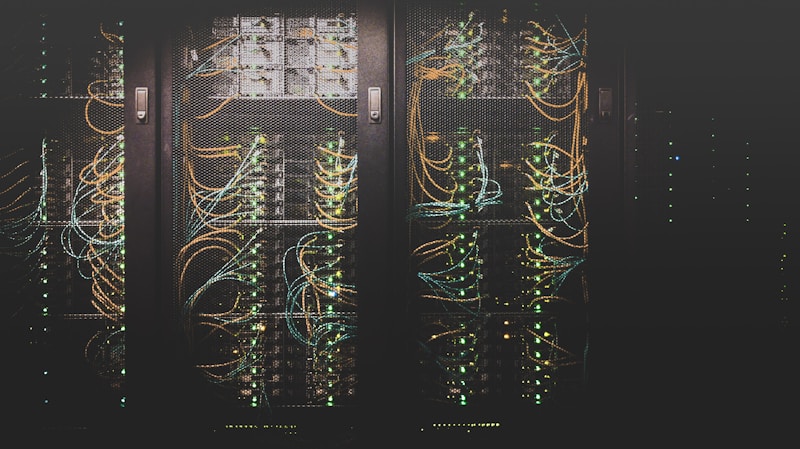
Not only does AI affect your learning and mental growth, it also has a physical effect. As previously stated, the use of AI requires the data analysis of hundreds of thousands of different sources and only improves the efficiency over time. However, these platforms need to be trained and require an immense amount of electricity just to maintain the amount of users on the models. In the last five years alone, around 2,000 to 4,000 data centers emerged in the U.S. to handle the growth of AI. With billions of dollars in investments, these data centers are now home to large amounts of high performance computing hardware such as data storage drives, network equipment and computer servers. In an MIT article, Noman Bashi discusses the environmental effect of AI: "Fundamentally, it is just computing, but a generative AI training cluster might consume seven or eight times more energy than a typical computing workload" [3]. To put things into perspective, the amount of energy needed to sustain these data centers not only uses up thousands of megawatts of electricity, but also generates around 600 tons of carbon dioxide per year. Specifically, each search on ChatGPT consumes around five times more electricity than searching something up on the web. You may be thinking that you'll now limit your time on these AI platforms, but now these systems are even ingrained in your google search. With the assistance of Google AI, it automatically provides an AI overview with every search.
Aside from affecting the air quality and climate change, these centers also require around five million gallons of water daily to cool processors down [4]. Think about your computer after a couple of hours, overheating to the point where you have to shut it down and give it a break. Now multiply that by a hundred. In the United States alone, around 32 billion gallons will be used annually by 2028, heavily affecting areas that are currently in droughts [5].
Although artificial intelligence is revolutionizing the way we go about our daily lives, from simplifying an email to interpreting a document, it has in fact shown itself to be a silent killer. The subject of many debates, AI has proven to affect not only our drinking water carbon footprint and careers, but also the cognitive abilities and creativity of many individuals.
References
- chatgpt.com
- Mineo, Liz. "Is AI Dulling Our Minds?" The Harvard Gazette, 13 Nov. 2025, news.harvard.edu/gazette/story/2025/11/is-ai-dulling-our-minds/.
- Adam Zewe, "Explained: Generative AI's environmental impact," MIT News, Jan. 17, 2025.
- https://www.consumerreports.org/data-centers/ai-data-centers-impact-on-electric-bills-water-and-more-a1040338678/
- https://aitribune.net/2026/03/25/ai-data-center-water-usage-in-2026/
- https://news.mit.edu/2025/explained-generative-ai-environmental-impact-0117