A Principal of Purpose and Possibility
Charlotte Walls interviews Principal David Newman
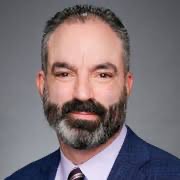
Principal David Newman of Brooklyn Technical High School is an educator who has dedicated over 25 years to the Tech community. As a Bronx Science alumnus, Mr. Newman originally planned for a career in law before discovering his passion for teaching while tutoring in graduate school. Since joining the faculty at Brooklyn Technical High School in 1998 as a social studies teacher, he has risen through the ranks by serving as an Assistant Principal and Interim Acting Principal before his official appointment as Principal in 2020. Beyond his administrative leadership, he is a lifelong supporter of the arts and an avid drummer who brings leadership and creative energy to one of the nation's premier specialized high schools.
Charlotte:What does it mean to you to see a student-led journal like this being created, and what message would you like to share for the inaugural issue? This issue focuses on AI and how it affects students now and in the future.
Principal Newman
Hearing student perspectives on anything is great, and to have something on the level of a scholarly journal is especially impressive. I think it is great to take issues that affect students' lives and their education and examine them from an analytical, intellectual, and journal-based perspective.
Charlotte:As principal of Brooklyn Tech, what excites you most about leading one of the most accomplished and historic public high schools in the country?
Principal Newman
What excites me most is being able to assess the environment that students are in and make decisions that help improve that environment, leading to a better educational experience. I am constantly tapping into what the student experience is and trying to make decisions that make their education better. Beyond that, I work to make the culture and community of the school a better one. I do not rest on the laurels of the students who come to Brooklyn Tech or the reputation of the school. I look at students as human beings and figure out ways to create a better culture and educational climate for them to thrive in. I find that exciting.
Charlotte:What qualities make Brooklyn Tech students unique, and what impresses you most about the current generation of students?
Principal Newman
I went to a specialized high school, and I see a lot of myself in the students here. In some regards, I think not much has changed in specialized high schools compared to when I was in high school. What makes Brooklyn Tech students unique is that students are selected based on an exam. That yields a certain type of student: a student who is a strong test taker. We help them reach their full potential by challenging them to work really hard. It creates a different dynamic than some other schools, like Townsend Harris, for example. That school screens students mostly based on grades. We do not; we use one grade on an exam. It does not reflect how you performed academically in middle school. There is usually a correlation with having good grades, but it does not have to be the case. So there is a unique skill set that students come here with, which is the ability to do really well on exams. We are very cognizant of that, and we create the educational experience to help students reach their full potential based on that.
Charlotte:How have you seen AI impacting classrooms, and how will it transform education over the next five to ten years?
Principal Newman
That's an interesting question. The English department has done a lot of work on the impact of AI in the classroom. I think they see themselves as being on the front line of this, in the sense that there is concern AI could do a lot of that work for students. We had similar fears when Google first came out, but we learned how to successfully integrate Google into the educational experience, and it did not replace teachers. I see AI in a similar way. Is it going to transform education in some ways? Yes. In other ways, no. I do not think teachers are going to disappear, and I do not think anything can replicate an in-person human educational experience. I feel that relying on AI is not as dramatic as some people think. I like to believe that students come here to receive a certain type of education, and that they are not going to take shortcuts in their own learning. I hope students focus on learning, value the educational process and experience, and appreciate the intellect and insight that come from learning rather than simply earning grades or taking shortcuts. I am not overly worried about AI. I do think we will need to make changes in some of the ways we assess students and modify what homework requires. As adults, we are probably a little behind students in that regard. If you think you can give the same type of homework for a similar lesson taught ten or twenty years ago, I think you are definitely mistaken. It requires some change and an understanding of how students learn today.
Charlotte:What skills will students need in this AI-driven world?
Principal Newman
Students will need to learn how to use AI as a tool to help make things more effective and efficient, but not allow it to replace actual learning or doing work on their own. There is no real value in simply the amount of time it takes to do homework; the value is in what you learn and gain from it. So if AI helps students complete work more effectively and efficiently, that is great, but not at the expense of learning and the value that homework is meant to provide.
Charlotte:I interviewed Jonathan Haidt, author of The Anxious Generation. He raised concerns about mental health, attention spans, and the effects of social media and AI on young people. What are your thoughts on these issues for students?
Principal Newman
"People need to be with people. Later in life, you will be working with others. Very few jobs exist entirely in isolation, so school is where students need to learn those interpersonal skills."
Charlotte:Many students feel pressure to choose one career path early. In my interview with former Irish Prime Minister Leo Varadkar, he spoke about pivoting from being a doctor into politics. What advice would you give students planning for their majors in college and then their careers in the future?
Principal Newman
The notion that we ask students who are 14 years old to decide what they want to major in does not always sit well with me. Years ago, when I created the law major, I thought very few of those students would actually become lawyers. But when you track those students a decade later, many of them did become lawyers. I do not know if there is a simple right or wrong answer. Choosing a major early can feel like you are limiting someone. At the same time, I know that more than 80 percent of our students go on to study something in college that is closely aligned with what they studied here in their major. There are many reasons students choose majors and career paths. Sometimes it is a charismatic teacher. Sometimes it is a subject they truly love. Colleges are also asking students to decide earlier than they once did. When I went to college, I spent two years there before declaring a major. Now, if you want to be an engineer, you often have to apply directly to the College of Engineering within a university. I think students should get exposure to many different things before making those decisions. Internships can be valuable because they let students see what people in those jobs actually do, not just what they imagine those jobs to be. It is rare for someone to be absolutely certain of their career path at a young age. Broad exposure is better than being exposed to only a few options and choosing from those limited paths. You are going to spend a large portion of your waking life at work, so what you do should matter to you. It does not have to change the world, but it should be something you value and something you are proud of doing. Look at Leo Varadkar. He became a politician after training and working as a doctor. Clearly, he is talented. Maybe he felt a calling to serve people through politics instead. That is a great example of how career paths can change over time. Most people, however, choose one field and remain in it.
Charlotte:Leo Varadkar said he was never able to "complain about things and not want to try and change them." How do you inspire students to move from criticism to action and become problem-solvers in their communities?
Principal Newman
That is a good question. I think it depends on the type of person you are and the type of person you aspire to be. There are plenty of people who look at a problem and think, "This is terrible, woe is me," and then they get stuck in that mindset. They recognize the problem, and it affects them negatively, but they are not sure how to solve it. Personally, I am constantly thinking about ways to solve problems. For me, when things are most adverse or most difficult, that is often when life slows down and I can clearly see the path toward fixing the issue. My mind naturally starts working in that direction. I do not tend to dwell on the negative. Problem-solving and solutions are essential. If you sit around criticizing people or what is happening in the world but never do anything about it, then you are accomplishing very little. You may persuade some people, but you may also end up in negative arguments that leave you frustrated and disconnected from society rather than connected to it. That said, intellectual discourse around important issues still has value. It feeds your intellect, shapes how you think, and satisfies curiosity. There is merit in discussion for its own sake. But if you are upset about something, you should also try to find a way to improve it. Even if that change is only within your own life or within your own four walls, it still matters. It does not have to be something huge. You are rarely going to feel at peace unless you try to make things better.
Charlotte:What leadership lessons have you learned that you feel like students could benefit from?
Principal Newman
"Leadership is something that is cultivated. It comes from the decisions you make, the things you do, and the respect you earn from others."
Charlotte:Looking ahead, what is your vision for Brooklyn Tech in its future and the students graduating in the coming years?
Principal Newman
I would hope that students come out of here being well-rounded, being good citizens, and being helpful in their communities. I know people often ask whether students are going to remember a lesson on enzymes, quadratic equations, or Napoleon. They are probably not going to remember every detail. What they will remember are the skill sets they learn in class: how to have discourse, how to challenge ideas, how to critique, how to gather information, and how to work together. Much of the material students learn serves as a vehicle for developing those skills. Ultimately, I hope students learn to be good citizens, to be good people, and to work well with others. Those are the skills they will use for the rest of their lives. I want students, in all ways, to be well mentally and socially. If you are not okay, you will not learn well. I always tell people that you cannot go through this place alone. If you isolate yourself, have no friends, and only study on your own, it may work for a short time, but it will not last. It does not give you the skill sets you need to succeed in the real world, and it will keep you from reaching your full potential. That is why I like to see students helping other students and lifting each other up. I love to see collaboration. I take pride in seeing students achieve great things after they leave here. I may have never even met that student, and I still honestly feel pride in their success. It is the idea that we helped give that person a foundation of skills that supported their success. And I do believe that.