Weird, Wonderful, and Worth Publishing: Dr. Eric Rubin on What Excites Him in Science
Charlotte Walls interviews Dr. Eric Rubin
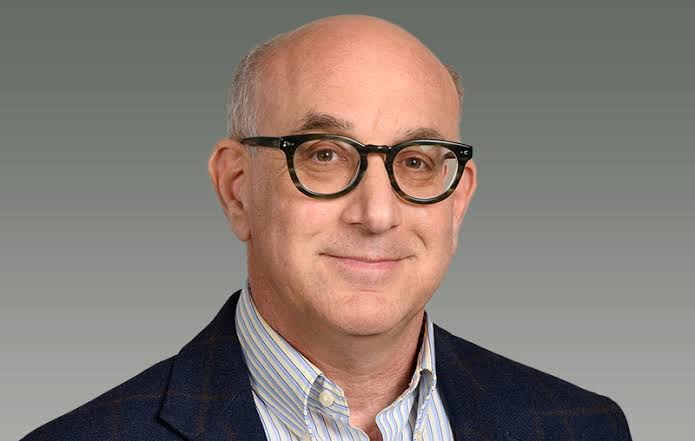
Dr. Eric J. Rubin, MD, PhD, is the Editor-in-Chief of The New England Journal of Medicine and NEJM Group, a role he assumed in September 2019 as successor to Dr. Jeffrey Drazen. An infectious disease physician at Brigham and Women's Hospital, he is also a tuberculosis researcher at the Harvard T.H. Chan School of Public Health, where he previously chaired the Department of Immunology and Infectious Diseases and still conducts laboratory research. A graduate of Harvard College who earned his MD and PhD at Tufts University, Dr. Rubin served as an associate editor of the journal for seven years before becoming its editor-in-chief. He is also a Fellow of the American Academy of Microbiology and a member of the National Academy of Medicine.
Charlotte:You have spent your career both conducting research and leading one of the world's most influential medical journals. What has been the most rewarding part of each of those roles?
Dr. Eric Rubin
The journal is easy to answer. The journal is a continuous learning process. It's incredible; we get to see a huge amount of interesting and exciting stuff. So the amount of information coming in and the ability to sit back and think it through is really great. In research, I might cheat and give you two answers. One is the ability to be creative because the research is a very creative process. And the other is that it is a team sport. I really like the collaboration within our lab and with other people outside the lab. It makes it fun. It's fun to get out there every morning and go to the lab.
Charlotte:Yeah, I definitely get that. I also go to a lab each day in school for Weston Scholars. What has been one of the biggest challenges you face in your career and what did you learn from it?
Dr. Eric Rubin
I think that the biggest challenge has been making choices. I'm trained both as a physician and as a scientist, and trying to strike the balance between how much clinical work to do and how much to devote to the lab has been a challenge through a lot of my career. I'm not sure I ever figured it out. I like them both and they complement each other. But trying to get it right has been difficult. I'm lucky. Now I can kind of set my own agenda to a much greater extent. But I don't think that I was particularly good at making those choices, but I had to make them.
Charlotte:Is there a scientific question that you still really want answered or treatment that you think should be discovered?
Dr. Eric Rubin
My own work is in tuberculosis. The treatment of TB is very good. The cure rates for drug sensitive TB are close to 100%, but it takes six months to treat in a standard regimen. That means that we lose a lot of people along the way. They don't complete their therapy and they relapse. We're not so good at treating drug resistant disease. I think the challenge that has interested me for many years is to try to come up with better treatment. Maybe one that's shorter and that people would be able to complete more successfully. I am continuing with my research in tuberculosis.
Charlotte:After seeing thousands of scientific papers throughout your career, what still makes you genuinely excited? Have you come across research that made you think this could really change medicine?
Dr. Eric Rubin
Yes. And I should say that what gets me excited isn't necessarily the same thing as what will change medicine. Although that is exciting. Let me give you an example of the latter. We recently published an article on a new treatment for pancreatic cancer, which doubled the life expectancy of pancreatic cancer patients. Pancreatic cancer is a horrible disease. There really hasn't been any progress for a very long time. And suddenly we have a new drug that could be the beginning of real progress in the area. But I get equally excited about some things that are obscure, like rare diseases where people have figured out the answer and it's just cool. I like coolness. I like it in the lab and I like it in articles. We don't publish very much basic science in The New England Journal of Medicine. It is a medical journal after all. But I do love to see it and sometimes we get to publish it and I really enjoy that.
"I like coolness. I like it in the lab and I like it in articles."
Charlotte:Is there a rare disease that you thought was the most interesting?
Dr. Eric Rubin
It's a little technical. I will tell you my favorite article, just because it is so weird. It comes from before my time as the editor-in-chief; back when I was the infectious disease editor. There's one case report that I just thought was really interesting from many years ago. There was a case in the country of Colombia with someone who was quite ill, very immunocompromised and ended up passing away from this disease. So it was not a nice story. It was thought he had cancer that had spread through his body. But in fact, what he had was a tapeworm that had cancer. And then the tapeworm cancer spread through his body. It is just so weird. Things like that can happen and they're so surprising.
Charlotte:Thinking about technology, what positive and negative effects has AI had on medical research? What role do you see it playing in the future? Could AI eventually make certain types of research, such as systematic reviews, obsolete if it can generate summaries in minutes?
Dr. Eric Rubin
For research, I see there are many exciting ways that AI can contribute. Many researchers now are using very large data sets and have over the years developed algorithms to interpret them. But AI and machine learning, let me call it machine learning to be a little more general. It really gives you a way of looking at data in a different and much more efficient way. It may be harder to figure out why it finds these connections, but it can find connections that are not obvious to us. And I think that has revolutionized a lot of research, especially in the big data space. It's also easier to do literature research. You can easily look up a topic. Instead of spending a long time Googling and on PubMed, you can easily look up a topic and get background on it quickly. From the publishing standpoint, I think AI is a valuable tool but it's important for people to stay engaged in their research. AI, as a tool for writing, is great, especially if English isn't your first language. But the thinking behind the research still has to come from the researcher. I do think that reviews are going to change. The reviews that we get are from experts in the field and we want their opinions, we don't really want that from AI. But when it comes to a question about a patient in front of you, AI can generate a very good, focused view of a topic that pertains just to your patient. And that we can never do in a published article. I think right now there's a role for both; for reviews and for AI queries that are generated on the fly. I don't know what things will look like in the future. Things are changing incredibly rapidly.
"AI, as a tool for writing, is great, especially if English isn't your first language. But the thinking behind the research still has to come from the researcher."
Charlotte:In your lab or as the editor-in-chief of The New England Journal of Medicine, are you using AI?
Dr. Eric Rubin
I use AI in the lab to do literature research all the time. We certainly do machine learning to analyze data. We use machine learning models, not LLMs (large language models). These are custom machine learning models that we've developed. But, I discourage people in the lab from using AI to write. I think it can help them edit. We have to learn to write and if you give it over to AI, you will never learn how to do it. The writing process for a grant or a paper is part of the research process. AI can support that process, but the researcher still needs to do the thinking.
"We have to learn to write and if you give it over to AI, you will never learn how to do it."
Charlotte:Do you use OpenEvidence or a different AI?
Dr. Eric Rubin
I use OpenEvidence in the clinic. It's very helpful, but I look up all the references it gives me. The beauty of OpenEvidence is it will link to references of the original article and I check that it's right. In the lab, we use different LLMs because OpenEvidence is mostly for clinical medicine and it doesn't really apply to our research.
Charlotte:What do you think young researchers can contribute to science that they might not realize they have to offer?
Dr. Eric Rubin
Science is all about creativity. It's not about how many things you memorize. It's about how many new ideas you can generate and test. And I think everyone has creativity. The thing about biology as compared to some of the other disciplines like physics or math is you do need to know a lot in order to develop hypotheses that are going to be useful. So there is a lot of time needed to be spent just learning the background. In the end, figure out what makes the most sense and what you can contribute as an individual. I'm not sure that's going to change a lot with AI. AI may make it more efficient to test those hypotheses, but generating hypotheses requires thinking outside the box and at this point, only humans can do that.
"Science is all about creativity. It's not about how many things you memorize. It's about how many new ideas you can generate and test."
Charlotte:What do you do when you're not working? Is there something completely unrelated to science that you enjoy?
Dr. Eric Rubin
There are several things. I travel all the time and I love to travel. I'm traveling for work mostly, but I get to see lots of parts of the world. I usually go a couple times a month, so that's super fun. I also do the usual stuff. I like movies. I like ice cream. I'm a normal person.
Charlotte:Where have you enjoyed traveling to?
Dr. Eric Rubin
Many places. This year, I've been to Africa twice. I've been to Italy, Germany, and Switzerland. I will go to China next month and to Tibet, Germany again, and Korea. My wife is from Japan and I love Japan. There are so many beautiful places. I have spent more time in South Africa than any other country and I really love South Africa. I've only been to Australia once, but I loved that time there. There's so much to see.
Charlotte:Wow, that's amazing you are able to travel through work. That's a dream.
Dr. Eric Rubin
It's lucky. I work on global disease and that gets me to these areas of the world where the disease is actually impacting, which is so interesting. I spent two weeks teaching a course in Kenya this summer. It was a Harvard Kenya class with Harvard and Kenyan students. It covered climate change, ecology, paleontology, human evolution, and many other things. They went to different parts of Kenya. So the parts where I was teaching were in areas with infectious disease and we were on the coast on the Indian Ocean and up in the rift valley, many of the famous human fossils were discovered there.
Charlotte:So if you could go back and talk to yourself at my age, what would you tell yourself?
Dr. Eric Rubin
I would say, take chances. I don't think I took enough. I could have done more. I am happy with the way my career worked out. But, I would have done different things and I think I missed opportunities that I could have taken. One of the things about choosing a career when you're young is there's kind of a pipeline that you see and think, I should do this and this and this and this and this. But in fact, there isn't one way of accomplishing that. And I think I was led down to it, sort of conventionally. I've done ok.
"Take chances. I don't think I took enough."
Charlotte:So is there anything else you would like to add?
Dr. Eric Rubin
The reason I like science is not as a way to get famous since not many scientists get famous. I certainly like the idea of being able to help people. But the truth is, it's just really fun. And I think finding what you do for work fun is the way to enjoy a career. It's not for everybody. For those who really enjoy it, like most of my colleagues, I think we are very lucky. I could have been a lawyer, but I'm not sure I would have enjoyed getting up every morning. My wife is a lawyer.
"Finding what you do for work fun is the way to enjoy a career."
Charlotte:Did you always know that you wanted to go into medicine?
Dr. Eric Rubin
It's an old story, but absolutely true. My father didn't go to college. He used to tell me, I don't care if you become a doctor just as long as you go to medical school. So he had decided for me very early on. I didn't really understand what science was until I went to college and then that's where I caught the bug. I majored in biochemistry. A lot of the biochemistry majors went to medical school or got a PhD. My coursework was very science oriented, and it made me realize that I really love this stuff.