From Physician to Prime Minister
Charlotte Walls interviews former Prime Minister of Ireland Leo Varadkar
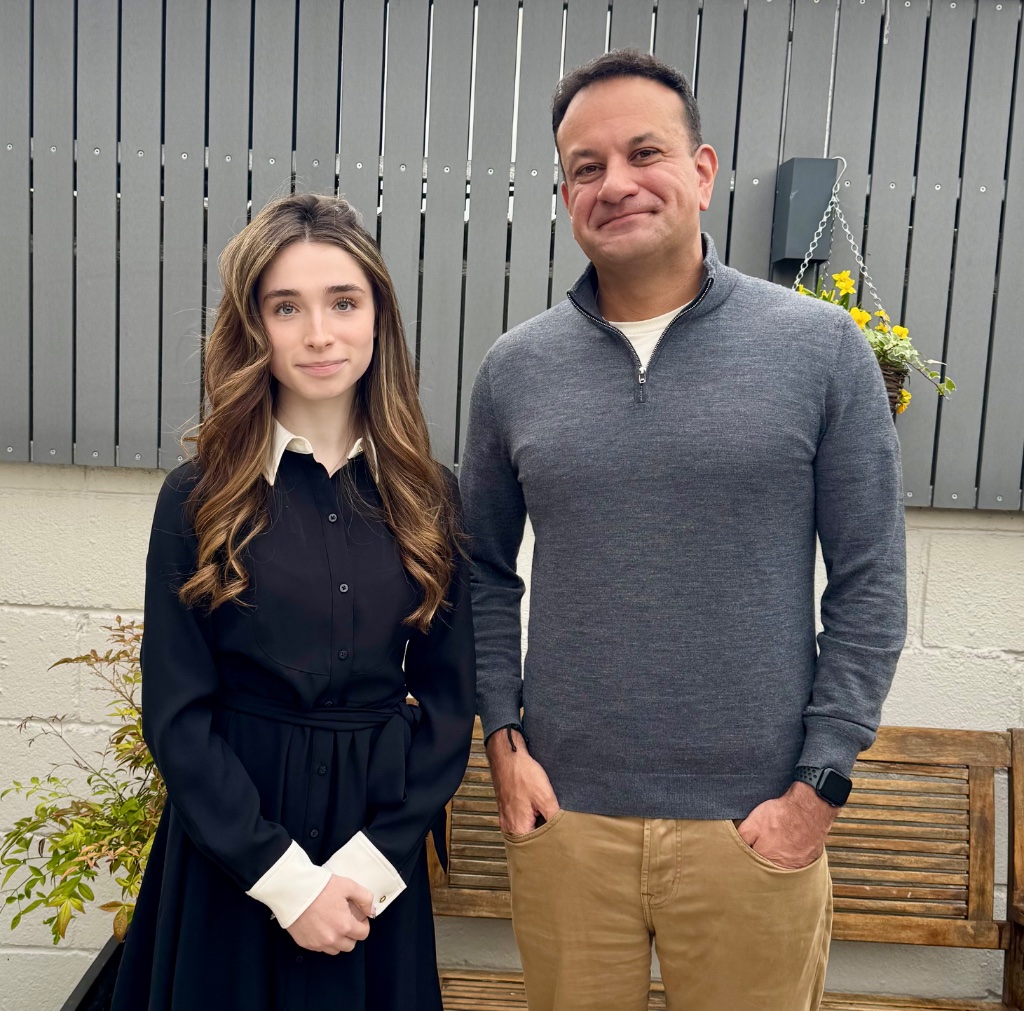
Dr. Leo Varadkar is a former leader of Fine Gael and served as Prime Minister (Taoiseach) of Ireland from 2017–2020 and 2022–2024, as well as Deputy Prime Minister (Tánaiste) from 2020–2022. He is a doctor who trained at Trinity College in Dublin and entered politics in 2007. Varadkar held several senior ministerial roles under Enda Kenny, including Health and Social Protection. He became Taoiseach at 38, the youngest in Irish history and the country's first openly gay leader, as well as the first of Indian heritage. He led a coalition government and played a key role during the Brexit period and the COVID-19 pandemic. Varadkar is associated with centre-right economic policies and supported major social reforms, including the legalisation of same-sex marriage and the liberalisation of abortion laws. He stepped down in 2024 and retired from politics later that year. Varadkar subsequently took on an international advisory role in the private sector and in 2025 he published his autobiography, Speaking My Mind. He is currently a Senior Fellow at the Harvard Kennedy School.
Charlotte:What motivated your decision to transition from law to practicing medicine and then into politics?
Dr. Varadkar
I was always headed for politics. I was interested in law. Medicine was very much a family business: my dad and my sister are doctors. Even when I was seven or eight years old, I remember going to vote with my mom. I remember being really interested in elections, posters, and all that kind of stuff. I always thought I would have a normal career first, probably in medicine, before running for government positions, but it was always in my mind that I would end up in politics. Politics fits my personality in many ways. I have never been able to complain about things and not want to try and change them. Many people will give out about the system, rubbish politicians, the health service being a mess, or our local area not having enough amenities. I was never able to give out about the situation and blame other people without trying to get stuck in. I loved being in politics, and I am proud of what I achieved. In the areas where I did not succeed, I am at peace with that fact, because I did at least try my best.
Charlotte:What was the biggest challenge you faced when making the transition?
Dr. Varadkar
The transition from medicine into politics happened over a long period of time. There was a period when I was double jobbing. I was trying to finish off my GP (general practitioner) training, as well as being a first-time TD (Teachta Dála – Irish Parliament Deputy), and that was very difficult to manage. I often felt, at various points, that I was doing a poor job of both because I could not be fully dedicated to either. I was writing emails at 4 a.m., and sometimes I felt I was letting down colleagues, and that was not ideal. Then there was the issue of job security. Medicine is a very secure job: you will always be employed, you will always be well paid, and you will always get a mortgage. Politics is extremely volatile, so taking the leap to go fully into it was a big move.
Charlotte:Were you fearful of making that leap or that change?
Dr. Varadkar
No, because I wanted to do it. If you have a strong desire to do something, you are going to go for it. I think of it like high-performance sports or even showbiz. My mother, in particular, was very insistent that I should finish my degree so that I would have a real job to fall back on. So I finished my degree and the GP training scheme.
Charlotte:In your opinion, what can politicians learn from doctors when it comes to serving people?
Dr. Varadkar
There are a couple of things. I think the communication skills that doctors have and learn can be very useful. Often, as a doctor, you are explaining complicated concepts to patients in language they can understand, which is similar to politics. You need to show them that you have their best interests at heart. The scientific way of thinking is to analyze a problem, do investigations, come up with a diagnosis, and then prescribe a treatment plan. This method of problem-solving is important, along with strong communication in explaining complicated concepts and also gaining consent. If you want to be successful as a politician, you need to continually get public consent and support. In politics, you do need people from all sorts of backgrounds. If everyone studied politics and then became a politician, there would be limited ideas and practical skills.
Charlotte:Leadership often involves difficult decisions. How did you approach moments when there was not a clear right answer?
Dr. Varadkar
Most of the time, that's the reality. From the outside, people often think that if you are making a big political decision, there is a right answer and a wrong answer: if you pick the right thing, everything works out, and if you pick the wrong thing, everything goes wrong and it is all your fault. In reality, it is often A and B, and they both have pros and cons. Sometimes it is options A, B, and C, and they all have pros and cons. It can be very difficult to know what the right thing to do is. You cannot go on the radio the next morning and say, "I am 60/40 on this, but I think we are going to give it a go." You must display a degree of certainty that really is not there most of the time. All you can do is try to make the best decision you can based on the information available. Then you consult a few people, since there are always things that you do not consider. One thing I borrowed from the Obama White House was a designated contrarian. There would always be somebody on our team who played devil's advocate and told us why our idea was the wrong thing to do. I made sure the contrarian was not the same person each time, in order to have differing viewpoints.
Charlotte:What was the most rewarding and challenging part of serving as Prime Minister?
Dr. Varadkar
The most rewarding part was when I could see my work paying off. I remember when two positive outcomes happened on the same day. The first one was in my local district. We finally opened our new hospice. I was involved with the project from the planning permission when I was in local government to securing the funding to equip and staff it as Health Minister. To be able to actually bring a project to completion, knowing that for generations to come there would be a hospice in my hometown where people would get good end-of-life care, felt like a big accomplishment. On the same day, we won the vote in the marriage equality referendum, in which gay marriage became legal. It was a campaign I came to late, but got very involved in. That was one of those days when you saw everything pay off. On the downside, these results took a long time. Often, people take the view that if only the politicians cared enough, or if they only put enough resources behind something, that would solve the problem. But it is never that simple. We struggled in particular with the housing shortage. If there were a cheque we could have written or a bill we could have passed to solve the problem, we would have.
Charlotte:How did you handle criticism or public pressure, especially in such a visible role?
Dr. Varadkar
There are different forms of criticism. Some you just have to ignore, particularly the online commentary of people who want you to fail or enjoy talking the country down. It is very different from criticism from somebody who actually wants you to succeed and is proud of the country. You must make that distinction. There will be criticism purely because they are opposed to you, opposed to the party, opposed to the government, or want your job. This is also criticism you must hear. Nobody likes criticism, but you have to be open to hearing it, especially from people who support you and want you to achieve your goals.
Charlotte:From the start of you working in politics to now, have any of your views or opinions changed?
Dr. Varadkar
Yes, they have. I would be suspicious of somebody who has the exact same opinions that they had 20 years ago, because we all have life experiences, and context changes as well. You also have to take account of public opinion. The areas where my ideas are the same as they were when I was in my 20's are believing that Ireland's place is as part of the European Union and in the world. I am an internationalist, and I want Ireland to be part of Europe, part of the UN, and multilateralism striving to make the world a better and safer place. In economic policy, I have always been right of center, believing that you have to create wealth before you can distribute it: you need to support business, you need to try and keep taxes competitive, and you need to balance the books. But I have probably become more liberal on questions of social policy, such as issues around abortion and individual rights, like recognizing trans people and things like marriage equality. That is partly a personal journey in my own life, but it also reflects a change in attitudes in Ireland.
Charlotte:What advice would you give students today who are unsure about their future since you changed your career path from medicine into politics?
Dr. Varadkar
"Be aware that opportunities arise when they do, not when they suit. Grab the opportunity, because it might not be there when it suits you."
Charlotte:You were talking about how you want Ireland to be a very international country. What do you see in Irish politics in the coming years and what are your hopes?
Dr. Varadkar
A big concern would be that the economic sweet spot we're in at the moment won't, and can't, last forever. There is an expectation every year that there should be much more funding for everything. Very understandably, with food and energy prices going up, people are demanding government action to bring them down again. That is all fine when there is money and budget surplus, but we are not going to have that forever. The economic situation will not always be as good as it is now, and hard choices will have to be made again. I believe Ireland is a great country. There is a lot going for it, and many of the fundamentals are very strong: the demographics, the economy, education levels; all of that is pretty solid, and it gives me a lot of hope for the future. In 30 years time, I would like to see an Ireland that is a unified state and that has affordable housing for everyone. That would be a big achievement. I would also like to see us finally get on top of the challenges we face right now in health care, where things have improved a lot in recent years and have become more available and more affordable for a lot of people, but are still short of where they could be.
Charlotte:Were there any countries that were an example that you tried to recreate?
Dr. Varadkar
I definitely learned there were not any perfect ones. There are about 200 countries worldwide, and I never came across one that has solved all its problems. It is reassuring to know that other countries' problems are often similar to those in Ireland. When I go to America, people talk about affordable housing, they talk about the cost of living, they talk about concerns around migration: they are the same issues seen everywhere. The countries we would try to benchmark ourselves against as much as possible, though, would be those of a similar size. So places like Finland, Denmark, New Zealand, and Singapore; countries with around 5 million people and a big neighbour. We would look at the kind of things they did and see if they would work here. You can do comparisons with Australia or the US and we do, but they never really work properly because big countries just operate differently.
Charlotte:With AI growing rapidly, how do you see that changing government?
Dr. Varadkar
I do not know, that is a great question. I think it is difficult to predict. I am a Xennial so we remember the world before it was digital. We would have gotten our first mobile phone in college. I am around long enough to remember sitting outside the Arts Block in Trinity College waiting for someone to turn up and not being able to message them if they were late! I remember, even at that time, people were talking about the internet, and there were all these predictions as to how the internet would change the world. And it has, but they were not very accurate. I genuinely think that, with regard to AI, we actually do not really have much of a clue as to how it is going to change things. I think a lot of our response is going to have to be reactive. I hope we react quicker, because when it came to things like social media, we were very slow to react. And now it is becoming more evident the extent to which it has harmed people's mental health. We were too slow, I think, to react and regulate. I hope we do not make that same mistake with AI. But the world needs to work together on that, because regulations will not stand if they are only done in some places. But I do think the world will go on. Throughout history, there have been all these predictions about technology eliminating work, but none of those predictions turned out to be true.
Charlotte:If you could give one piece of advice to your high school self, what would it be?
Dr. Varadkar
"Keep going. Have faith and confidence in yourself."